
Single-Layer Wave Spring
The simplest wave spring, minimal axial space, ideal for light-load preloading and sealing compensation.
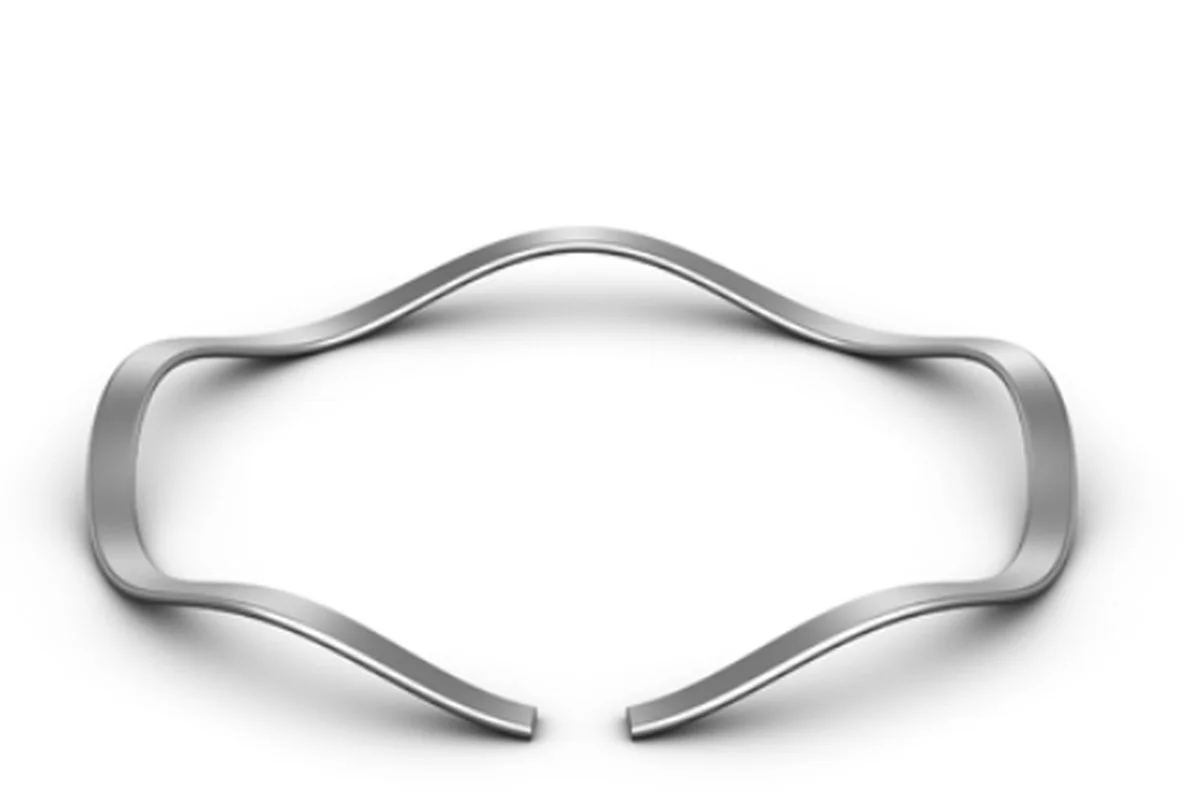
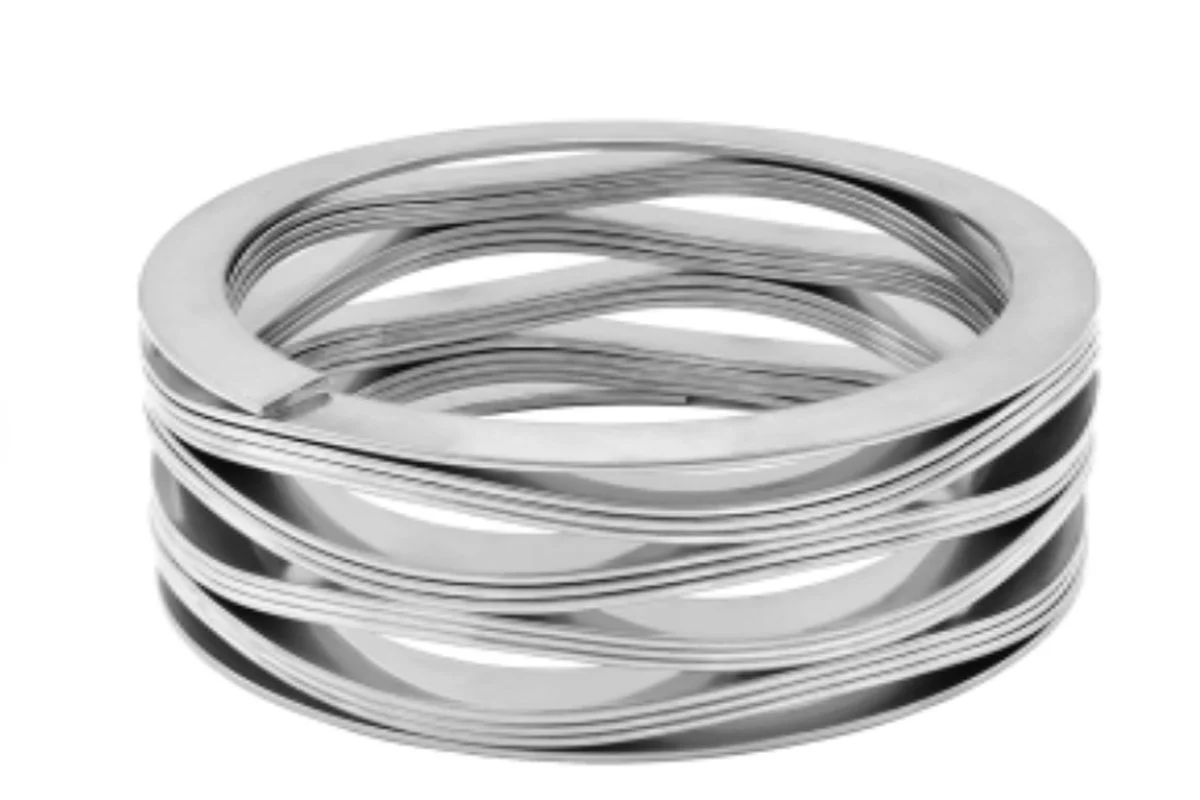
A wave spring is a flat-wire compression spring used to optimize assembly space. Each layer exhibits multiple wavy shapes, delivering the same spring force as traditional round-wire helical springs while reducing working height by 50%, providing engineers with a space-saving solution that meets the demands of compact-design technologies.
Full range of wave springs, supporting custom specifications
The simplest wave spring, minimal axial space, ideal for light-load preloading and sealing compensation.
Multi-layer stacking design, significantly increased load capacity, ideal for space-constrained heavy-load applications.
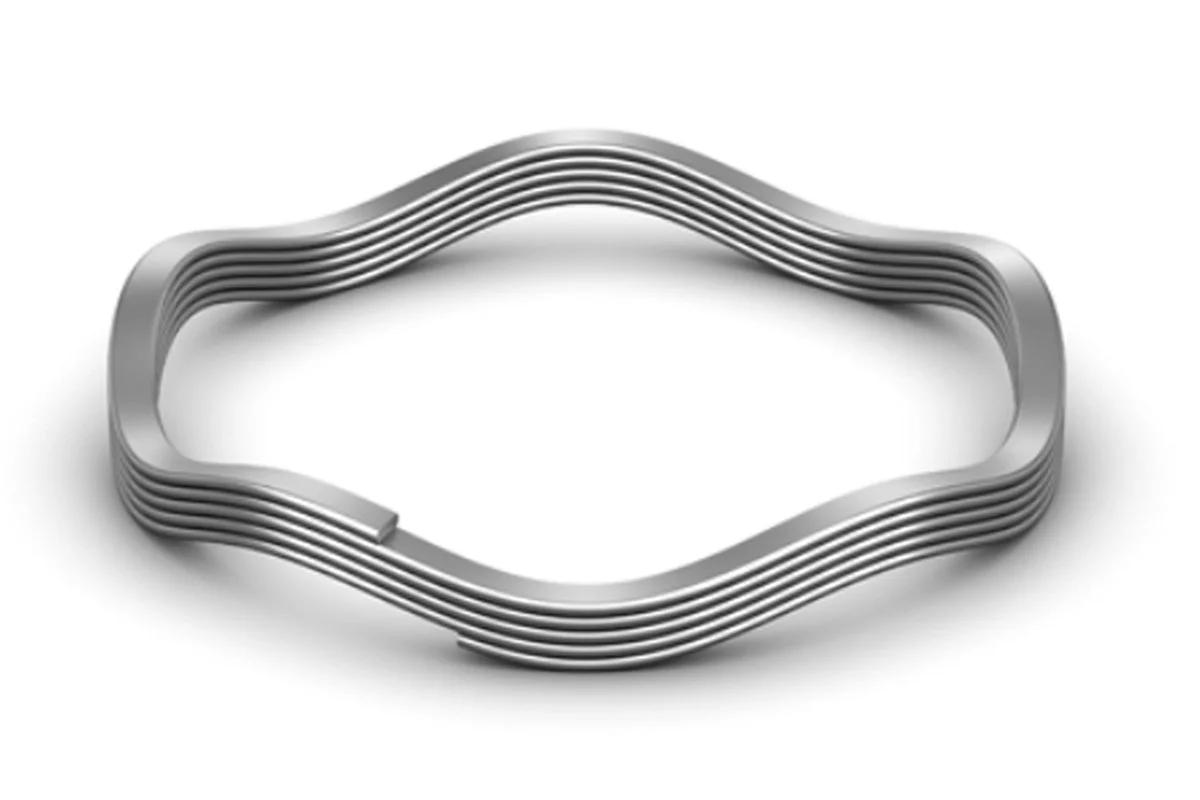
Wave-ring surface design, strong radial deformation capability, ideal for elastic compensation in sealing environments.
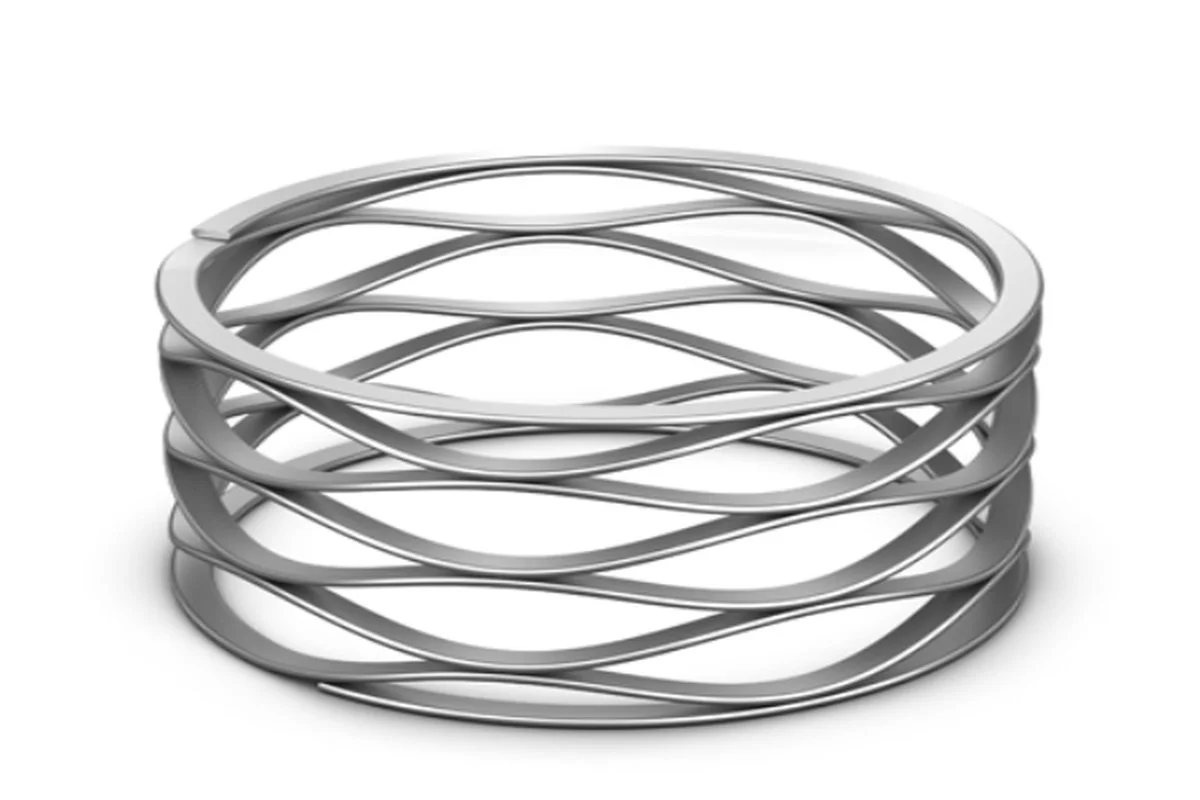
Two springs installed crest-to-crest, suitable for high-preload scenarios with excellent gap elimination.
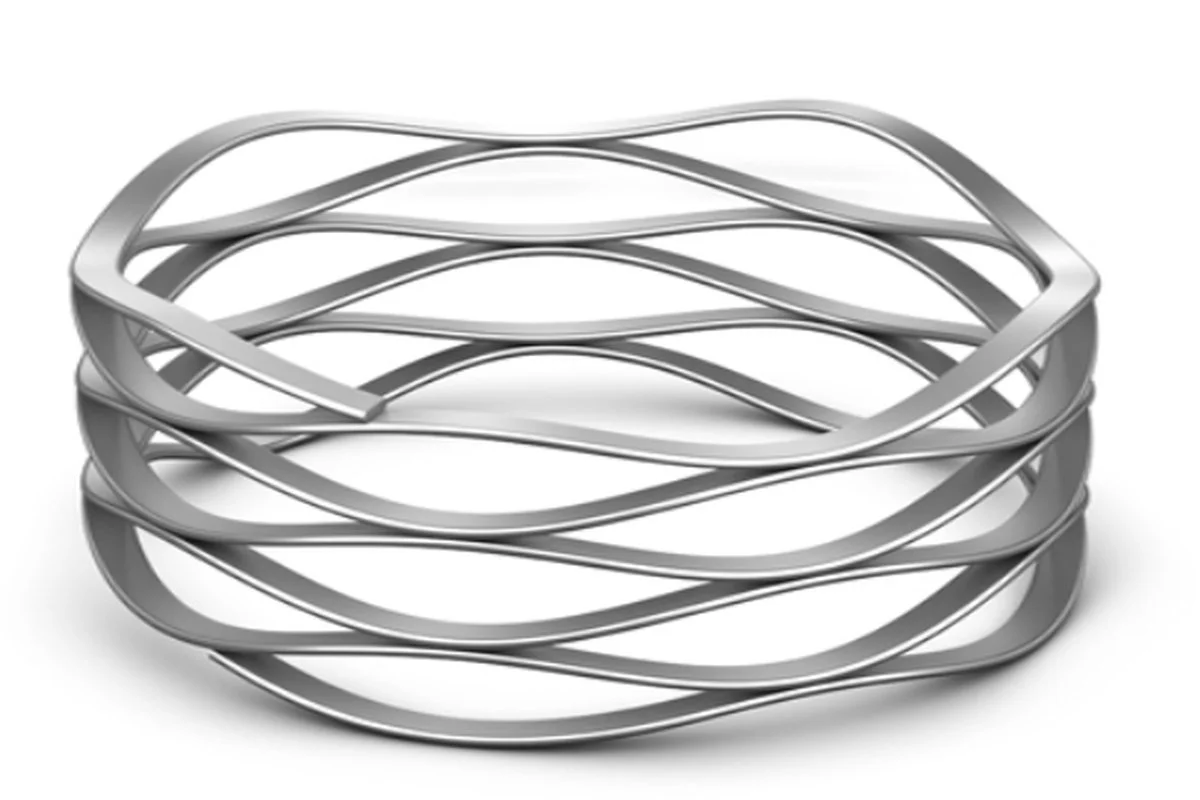
Multi-layer wave stacking, wide stiffness adjustment range, ideal for variable-load conditions.
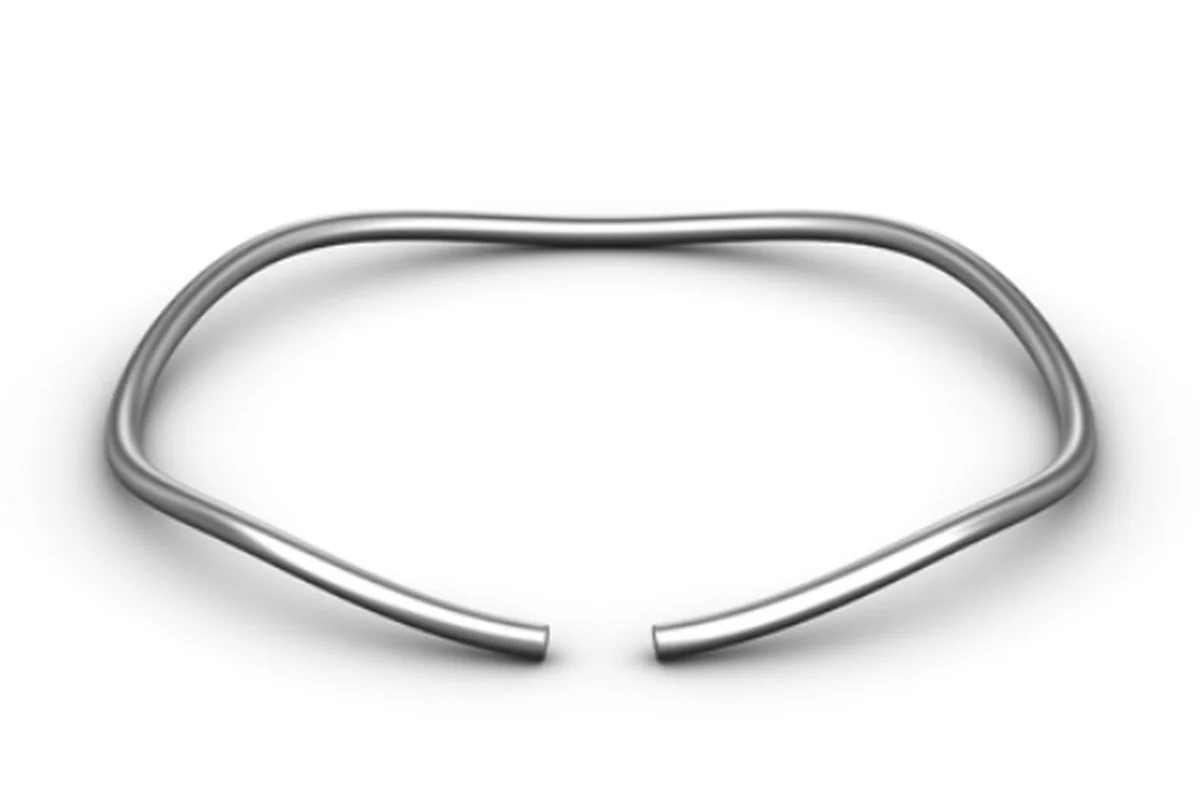
Round-wire winding, cost-effective, suitable for general industrial conditions and mass production.
3D DIGITAL SELECTION LAB
Compare 6 wave spring series in real-time 3D, inspect working height, axial thrust, and surface stress before choosing single-turn, multi-turn, or Crest-to-Crest.
Start with Fundamentals: Wave Spring Learning HubReduces assembly height by 50%, compact design reduces spring cavity volume, perfectly suited for tight radial and axial spaces.
Provides accurate and predictable load within tight tolerances at specified working heights, with uniform wave geometry and consistent load distribution.
Extensive alloy availability: carbon steel, stainless steel (302, 316, 17-7PH), Inconel 718, and phosphor bronze for extreme environments.
Standard catalog specifications in ample stock; custom prototypes designed and delivered within 1–3 business days.
| Parameter | Range |
|---|---|
| Wire Diameter / Strip Thickness | 0.08mm – 10.0mm |
| Outer Diameter / Inner Diameter | 1.0mm – 200mm |
| Free Height | 0.5mm – 50mm |
| Wave Count | 2–12 waves |
| Material | Music Wire, Stainless Steel (302/316/17-7PH), Inconel 718, Carbon Steel |
Wave springs are flat-wire formed elastic components. The elastic modulus, tensile strength, and corrosion resistance of the material directly determine the load accuracy and fatigue life of the finished product. TOSTA stocks 500+ spring material grades. The following 6 grades are most commonly used for wave springs and cover the vast majority of applications from general industry to aerospace.
| Grade | Key Properties | Operating Temperature | Applications |
|---|---|---|---|
| 65Mn Carbon Spring Steel | Elastic Modulus 206 GPa, Tensile Strength 980–1275 MPa, lowest cost | -40~120°C | General industry, bulk dry-environment applications |
| SUS301 Stainless Steel | Elastic Modulus 193 GPa, Tensile Strength 520–1100 MPa, elasticity stabilizes after work hardening | -200~300°C | High-precision bearing preload, connector contact-force compensation |
| SUS304 Stainless Steel | Elastic Modulus 193 GPa, Tensile Strength 515–1035 MPa, excellent corrosion resistance, weakly magnetic | -200~300°C | Medical devices, food equipment, general rust-proof applications |
| SUS316 Stainless Steel | Elastic Modulus 193 GPa, Tensile Strength 480–1300 MPa, molybdenum-bearing, chloride pitting resistance | -200~300°C | Marine engineering, chemical media, salt-spray environments |
| Beryllium Copper | Elastic Modulus 128 GPa, Tensile Strength 1100–1500 MPa, non-magnetic with excellent conductivity | -200~200°C | MRI and other magnetically-sensitive equipment, electrical conductive components |
| Inconel 718 | Elastic Modulus 200 GPa, Tensile Strength 1240–1430 MPa, high-temperature creep resistance | -250~700°C | Aerospace, oil drilling, high-temperature valves |
Beyond the above base materials, wave springs can also be enhanced with surface treatment as required: carbon steel is typically blackened or phosphated for rust prevention. For highly corrosive scenarios, a Dacromet coating is chosen to avoid hydrogen-embrittlement risk from electroplating; for high-cycle dynamic applications, shot peening is recommended. Introducing residual compressive stress on the surface significantly extends fatigue life. The combination of material and surface treatment should be confirmed during the drawing phase to avoid post-production rework.
The essence of wave spring selection is balancing load, space, life, and cost. The following 6 principles come from TOSTA engineering team's frontline experience. Our sales and technical teams have 5–15 years of spring industry experience and can provide manufacturable solutions upon receiving operating parameters.
Wave springs currently lack a unified dimensional standard like disc springs' DIN 2093. In engineering practice, the following material, general spring, and testing standards are typically referenced. If customers require supply under specific standards, they can specify this in the inquiry, and TOSTA will issue corresponding material certificates and inspection reports accordingly.
Under the same spring force and working stroke, the assembly height of a wave spring is about 50% that of a round-wire helical spring, so it can directly replace it in space-constrained cavities. However, if you need very large stroke or extremely high per-piece load, helical or disc springs are still more suitable. We recommend providing the cavity dimensions and target load together for our engineers to judge.
TOSTA keeps 9,000 standard parts in inventory, and waves arrive 1-24 hours after ordering. Custom specifications are usually produced and samples are taken within 1-3 days, with a daily production capacity of 30,000 pieces, supporting rapid delivery for bulk orders.
Standard parts have an MOQ of 1 piece, with no minimum threshold. Samples are shipped within 1-3 days. Custom part samples require a reasonable fee, which is refunded upon bulk order confirmation—convenient for rapid verification during new product development.
Permanent deformation usually comes from overloading or exceeding the material temperature limit; fatigue fracture is mostly due to high stress amplitude or lateral forces. TOSTA uses professional spring design and simulation software to strictly design and verify stiffness and force values, and can help review original drawings and propose improvement plans.
Batch variation mainly comes from material batch fluctuations and process parameter drift. TOSTA has spent 3.5 years developing the TOSTA Intelligent Spring Design and Manufacturing System to achieve full closed-loop control from design to delivery. Every batch of products is traceable to its material and process parameters.
TOSTA's full range of precision springs, switchable on demand — different spring types can be combined to solve complex working conditions
The first choice for high-load scenarios; a single disc spring carries 5–10× the load of a wave spring and suits axial preloading where larger clearance is available.
TOSTA · China precision spring manufacturer
The traditional solution for axial buffering and energy storage. Longer travel range and lower cost — a budget alternative to wave springs.
TOSTA · China precision spring manufacturer
Composite wave + rectangular structure that breaks the round-wire stiffness ceiling; ideal when you need high stiffness in a compact envelope.
TOSTA · China precision spring manufacturer
The elastic element for axial tension — pairs with wave springs (axial compression) to form a complete mechanical loop.
TOSTA · China precision spring manufacturer
Provide inner diameter, outer diameter, free height, and load requirements—TOSTA's professional team responds quickly
Inquire Now Mr. Wang +86 130-1246-1618