
When automotive connector engineers design high-voltage or high-pin-count connectors, they often concentrate entirely on plastic housing latches and PCB pin footprints, neglecting the wave spring that energizes terminal contact. In field root-cause investigations, over 80% of intermittent contact faults stem from mismatches across these five critical spring parameters.
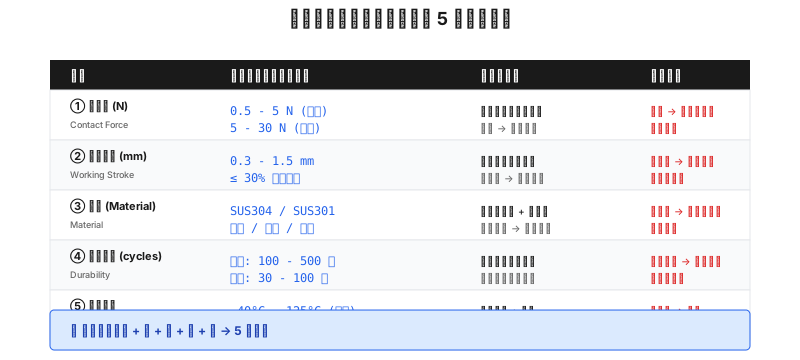
1. Contact Normal Force (N)
Signal Terminals: 0.5N to 5N. High-Voltage Power Terminals: 5N to 30N. Insufficient force leads to micro-motion fretting corrosion and contact resistance drift; excessive force causes mating insertion forces to exceed ergonomic limits and strips terminal plating.
2. Working Deflection (mm)
Typically 0.3mm to 1.5mm, but strictly <= 30% of spring free height. Exceeding 30% causes plastic deformation; insufficient stroke fails to absorb injection-molded housing manufacturing tolerances.
3. Base Alloy + Electroplating Chemistry
Standard material: SUS304 / SUS301 stainless flat wire, electroplated with gold, silver, nickel, or tin. In vibrating automotive environments, gold plating thickness must exceed 0.5um; unplated stainless steel experiences severe contact resistance oxidation.
4. Mating & Demating Cycle Life
Diagnostic signal connectors: 100 to 500 mating cycles; Heavy EV charging pins: 10,000+ cycles. Lower peak bending stresses guarantee long-term elastic retention; overloaded springs suffer premature fatigue yielding.
5. Operating Environmental Boundaries
Cabin Interior: -40°C to +125°C. Under-Hood Engine Compartment: -40°C to +150°C at 95% relative humidity. Under-hood battery packs require corrosion-resistant stainless alloys with specialized barrier plating.
Design Rule of Thumb: Normal Force + Working Stroke + Alloy Chemistry + Cycle Life + Operating Environment = 5-Factor Qualification. TOSTA's IATF 16949-certified facility delivers custom automotive wave spring designs and PPAP Level 3 documentation.